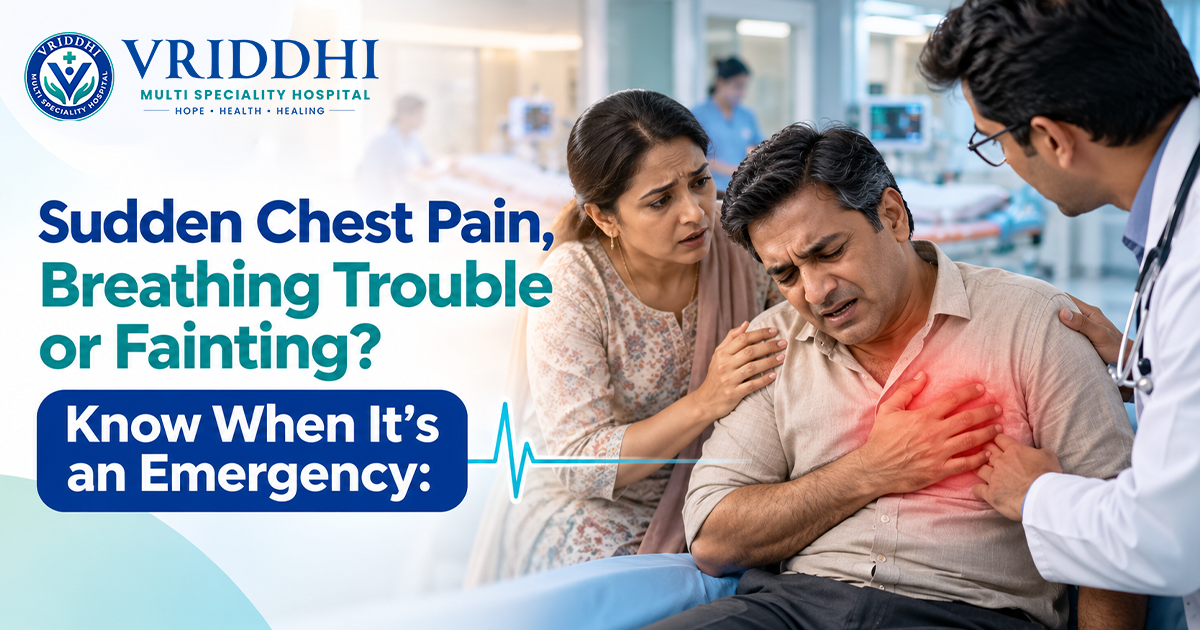
Chest pain can scare anyone.
Breathing suddenly feels difficult.
Then someone faints.
Do you wait and see if it settles down?
That’s where things can go wrong. Some symptoms aren't meant to be watched casually from the sofa, especially when they appear suddenly, become intense, or occur together. Chest pain with sweating, breathlessness, dizziness, nausea or fainting can sometimes point towards a serious medical problem that needs immediate assessment.
Don't wait.
When Chest Pain Needs Urgent Attention
Not every chest pain means a heart attack. Muscle strain, acidity, anxiety and several other conditions can cause discomfort around the chest. But there's a catch—you can't reliably determine the cause simply by guessing from the symptoms.
A heavy, squeezing or pressure-like sensation in the chest deserves particular attention, especially if it spreads towards the arm, shoulder, back, neck or jaw. The situation becomes even more concerning when the person is sweating heavily, feeling unusually weak, nauseous or struggling to breathe.
Imagine someone climbing a few stairs and suddenly stopping because their chest feels as though a heavy stone has been placed over it. They sit down, hoping it'll disappear. It doesn't.
That's not the moment to search endlessly for home remedies.
Sudden Breathing Trouble Shouldn't Be Ignored
Breathlessness can arrive for many reasons. Asthma, infections, allergies and other respiratory conditions can make breathing difficult. But sudden or severe breathing trouble can also signal a medical emergency.
Watch for warning signs such as very rapid breathing, bluish lips or fingertips, severe chest discomfort, confusion, extreme weakness or an inability to speak normally because of breathlessness.
And here's the thing: someone doesn't have to be completely unable to breathe for the situation to be serious.
If breathing becomes noticeably difficult without an obvious explanation, prompt medical evaluation is safer than waiting for it to "probably get better."
What About Fainting?
Fainting happens when there is a temporary reduction in blood flow to the brain. Sometimes it follows dehydration, prolonged standing, heat or a sudden drop in blood pressure.
But fainting during exercise, fainting accompanied by chest pain or breathing difficulty, repeated fainting, or fainting without an obvious reason needs medical attention.
Especially when it happens suddenly.
A person who collapses after complaining of chest pressure and breathlessness shouldn't simply be given water and told to rest. The priority is emergency medical assessment.
What Should You Do During a Medical Emergency?
Stay calm, but act quickly.
Call for emergency medical help. Keep the person in a safe position and avoid making them walk around unnecessarily. If they are unconscious and not breathing normally, emergency responders should be contacted immediately and CPR may be required if someone present is trained to perform it.
Don't drive yourself if you're severely breathless, fainting, confused or experiencing intense chest pain. You may need medical support on the way to the hospital.
Get Emergency Care Without Delay
When a medical emergency strikes, minutes can matter. Having access to a hospital with emergency services, diagnostic facilities and critical-care support can make the next steps faster and more organised.
Vriddhi Hospital provides emergency medical care along with multiple specialities and hospital facilities under one roof, serving patients in Chapra and surrounding areas.
For families looking for the best emergency care hospital in Chapra, access to timely assessment is one of the most important things to consider.
Vriddhi Hospital also brings together multiple specialities, making it a practical choice for people searching for the Best Multispeciality hospital in Chapra, best hospital in Chapra, or Best private hospital in Chapra.
When chest pain suddenly appears, breathing becomes difficult, or someone collapses, don't gamble on "let's wait for ten minutes."
Get help. Fast.